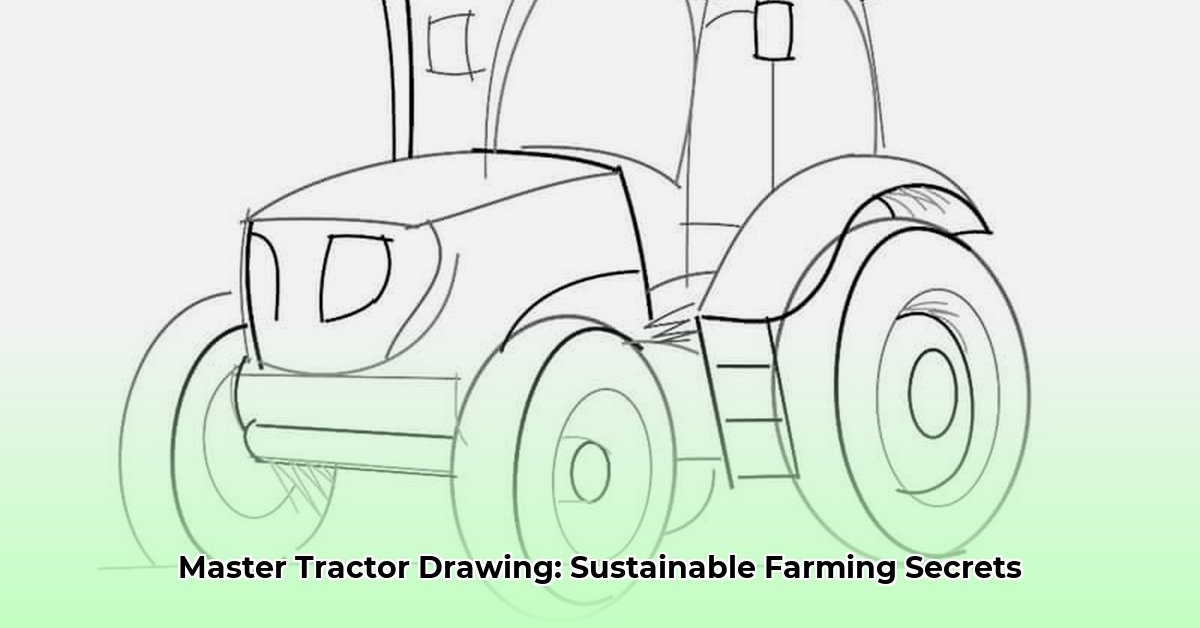
Drawing of a Tractor: Your Visual Guide to Sustainable Farming
Farming can be complex, filled with jargon and intricate processes. But what if learning sustainable practices was as simple as understanding a tractor drawing? This guide utilizes visual learning – the power of "seeing" to grasp complex concepts – to make sustainable farming accessible. We’ll show you how simple tractor drawings can unlock understanding of eco-friendly farming techniques. For more detailed tractor diagrams, see this helpful resource.
Why Pictures are Powerful Learning Tools
Visual learning leverages our inherent preference for seeing to understand. Studies show that many people retain information better visually than through text alone. (Source: [Insert Citation for study on visual learning effectiveness]). For sustainable agriculture, this means translating complex ideas – like soil health or efficient irrigation – into easily understood images. Instead of just reading about soil erosion, imagine seeing a drawing illustrating its impact.
A tractor drawing isn't just a picture; it's a roadmap. It reveals how design affects fuel efficiency, pollution reduction, or soil compaction. It simplifies complex machinery, providing a clear visual representation of its function.
Using Drawings to Understand Sustainable Farming
Consider different tractor drawings: one depicting traditional plowing, another showcasing no-till farming. The visual contrast immediately highlights the impact on the land. Isn't that a more effective way to learn than reading lengthy descriptions?
Here's how drawings aid sustainable farming education:
Simple Diagrams: Basic drawings highlight key sustainable features of a tractor—fuel-efficient engine, pollution control technology, soil erosion prevention mechanisms. A simple drawing can be profoundly effective in highlighting these key features.
Step-by-Step Illustrations: Drawings are ideal for depicting processes like planting cover crops or crop rotation. Step-by-step visuals break complex tasks into manageable steps. This sequential approach enhances understanding and retention.
Interactive Tools: Online tools allowing for interactive manipulation of tractor parts provide dynamic engagement and understanding of sustainable farming technology. This interactive experience makes learning more fun and memorable.
Videos and Animations: Moving beyond static images, videos and animations demonstrate sustainable farming in action, showing efficient plowing or the benefits of precision agriculture. This dynamic approach enhances comprehension.
Beyond the Tractor: Expanding Your Visual Learning
While tractor drawings offer a great starting point, visual learning extends to other aspects of sustainable farming. Illustrations of diverse planting methods, water-saving irrigation, or pest control without harmful chemicals are equally impactful.
Visual learning benefits experienced and novice farmers alike. It's a valuable tool for learning about new technologies or refining existing sustainable practices. A picture truly is worth a thousand words, especially when teaching sustainable agriculture.
The Future of Visual Learning in Sustainable Agriculture
The future of sustainable farming hinges on effective knowledge sharing. Visual tools are crucial for quick and efficient communication. As technology advances, we can anticipate even more creative and engaging methods of visualizing sustainable practices.
How to Use Video Tutorials for Sustainable Farming Adoption
Key Takeaways:
- Video tutorials provide easily accessible and engaging learning for diverse farmers.
- They bridge the knowledge gap between theory and practice.
- Visual learning aids in understanding complex sustainable farming techniques.
- Tutorials showcase diverse sustainable techniques and their regional applicability.
- Online access makes adopting sustainable practices more feasible.
- Video tutorials improve knowledge retention, promoting long-term behavioral changes.
Sustainable farming isn't just a trend; it's a necessity. Video tutorials significantly ease the transition to sustainable practices.
Unlocking the Power of Visual Learning
Consider learning tractor operation solely from a manual versus watching a video tutorial. The latter's intuitive approach makes learning far easier. Video tutorials aren't passive viewing; they facilitate active learning. You observe techniques, from cover cropping to optimized irrigation, firsthand.
Finding the Right Resources
Selecting quality resources is key. Prioritize videos from reputable sources such as universities, agricultural organizations, and experienced farmers. YouTube channels dedicated to sustainable agriculture are excellent starting points. Always verify the source's credentials, ensuring their expertise and experience. Look for videos featuring clear, concise instructions and demonstrations.
Integrating Video Tutorials into Your Farming Strategy
Here’s a step-by-step guide:
- Identify your needs: Specify the sustainable practices you aim to learn. Clear goals streamline your search.
- Search strategically: Use keywords such as "no-till farming," "integrated pest management," or "cover cropping."
- Evaluate each video: Assess video quality, credibility, and relevance to your unique farming context.
- Watch attentively: Take notes, pause as needed, and replay sections for complete comprehension.
- Practice and refine: Implement learned techniques. Document your progress and adapt your approach as needed. Regular review enhances retention.
Overcoming Common Challenges
Even with excellent tutorials, challenges remain. Reliable internet access is essential, and language barriers can be a hurdle. Complex information may require simplification if technical expertise is lacking. However, many resources provide subtitles and simplified explanations. The benefits of video tutorials far outweigh the challenges.
The Bigger Picture: Sustainable Farming for the Future
The impact of video tutorials extends beyond individual farmers; it fosters a movement. They facilitate knowledge sharing on a large scale, connecting farmers regardless of location or experience level. They promote collaboration and innovation, sparking discussions and building a community of sustainable agriculture advocates. Video tutorials are the seeds of change, cultivating a more environmentally responsible and economically viable agricultural future.